Understanding the ROI of AI in sportswear is crucial for brands seeking to maximize their investments. The sportswear industry runs on hype. A retro sneaker drop, a new performance fabric, a celebrity collaboration, these are the moments that can define a season. But for every sold out success, there is a warehouse full of unsold inventory from a trend that never took off. This is the billion dollar guessing game that brands play every year. What if you could move from high stakes bets to data driven certainty?
The answer lies in using artificial intelligence not just to predict the next big trend, but to precisely measure the financial return of acting on that prediction. Many brands struggle to connect the dots between an AI forecast and the bottom line. This guide provides a clear framework to measure the true return on investment (ROI) of your AI initiatives, transforming your trend strategy from an art into a science.
Understanding the true value of AI beyond direct sales
Before you can measure the ROI of AI in sportswear, you need to expand your definition of “return.” A classic ROI formula (Gain from Investment – Cost of Investment) / Cost of Investment is a starting point, but it often misses the most significant benefits. A more holistic approach reveals that AI delivers value across four distinct pillars.
Thinking about AI’s impact in these four areas helps you capture its full value, ensuring you account for savings and strategic advantages, not just immediate revenue.
- Efficiency gains
AI automates tasks like data analysis and content generation, freeing up your team to focus on strategy and creativity rather than manual work.
- Revenue growth
By accurately predicting trends, AI helps you stock the right products at the right time, leading to increased full price sales and fewer missed opportunities.
- Risk mitigation
The biggest return often comes from the losses you avoid, such as overstocking a failing trend and facing massive markdown costs to clear inventory.
- Business agility
AI allows you to spot and react to micro trends faster than competitors, improving your speed to market and strengthening brand relevance.
The hype to profit measurement framework
To truly understand the financial impact of an AI driven trend, you need to follow the entire lifecycle, from the initial investment to the final sale. This framework breaks the process down into measurable steps, connecting your AI strategy directly to your profit and loss statement.
Step 1 Quantify the investment
First, calculate the Total Cost of Ownership (TCO) for your AI solution. This isn’t just the software subscription. It includes all associated costs, such as data infrastructure, team training, and any necessary integration work. Having a clear picture of your total investment is the essential baseline for any ROI calculation.
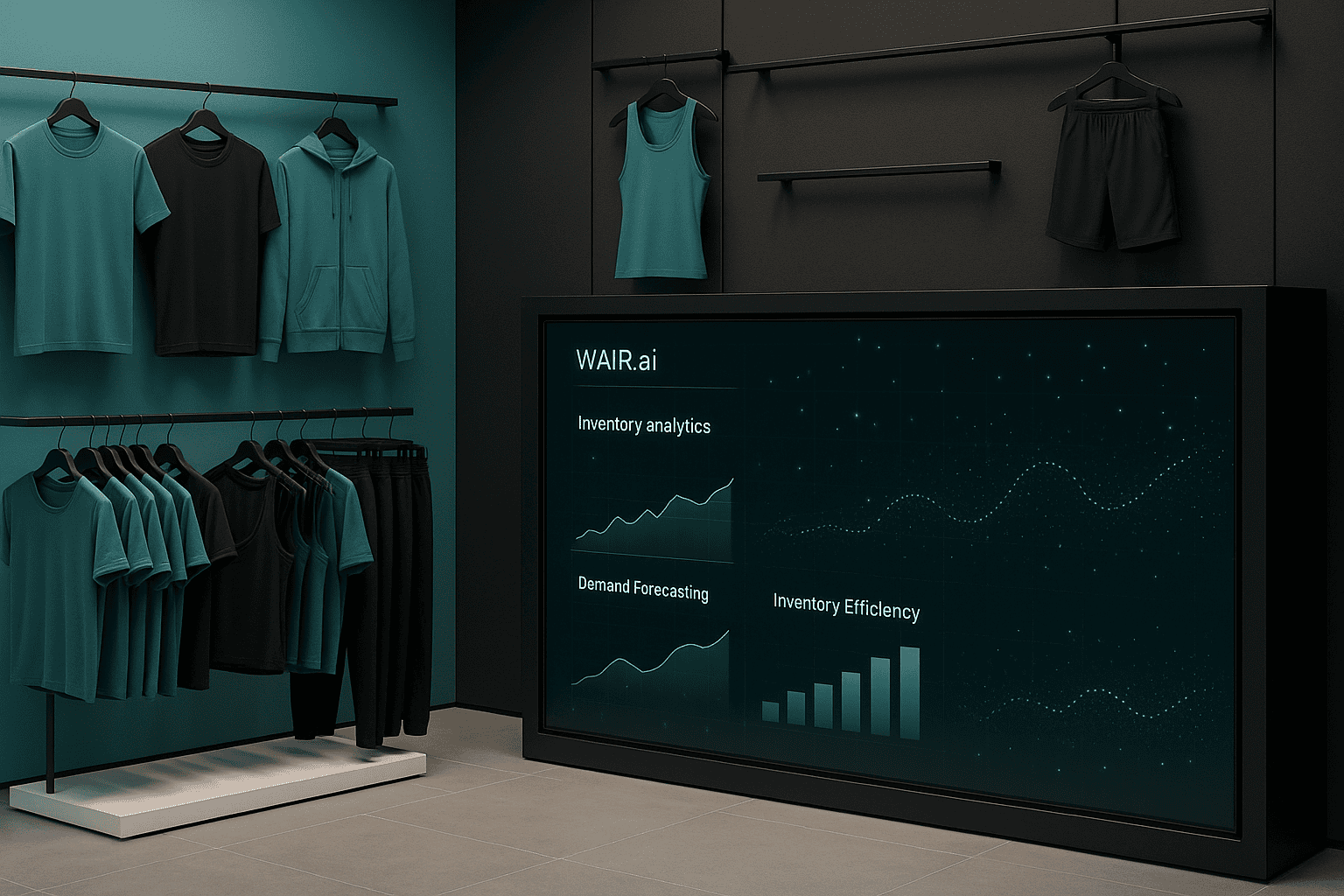
Step 2 Measure inventory efficiency
This is where AI’s role in risk mitigation shines. The goal is to compare the performance of AI selected inventory against a control group of products selected through traditional methods. By improving your demand forecasting tools, you can drastically reduce waste.
- Markdown reduction
Calculate the difference in markdown costs between AI guided product lines and the rest of your inventory to see direct savings.
- Inventory holding cost savings
Measure the reduction in costs associated with storing excess products that AI helped you avoid ordering in the first place.
- Sell through rate improvement
Track how much faster AI selected items sell at full price, which directly impacts your margins and cash flow.
Step 3 Measure marketing effectiveness
Once you have the right inventory, AI helps you market it to the right audience. You can measure this by tracking the performance of campaigns targeting customers interested in the specific trend your AI identified. Look at metrics like conversion rates, customer acquisition cost, and sales lift from personalized marketing efforts powered by AI insights.
Step 4 Measure strategic value
Some of the most significant benefits are strategic and harder to quantify, but they are crucial for long term success. Track improvements in your speed to market for new trends. You can also use brand perception surveys and social listening tools to measure if your brand is seen as more innovative and relevant after implementing an AI driven trend strategy.
Key performance indicators for sportswear AI
To make this framework actionable, you need to track the right Key Performance Indicators (KPIs). Generic business metrics won’t do. These sportswear specific KPIs will give you a clear view of how your AI initiatives are performing. To learn more about inventory metrics, explore our guide on key inventory performance indicators for retail businesses.
- Forecast accuracy rate
This KPI measures the percentage of AI predicted trends that met or exceeded their sales targets, directly validating your forecasting model.
- Markdown reduction percentage
It quantifies the decrease in discounted products for AI selected items versus a baseline, showing how AI prevents overstock.
- Sell through rate at full price
This tracks the percentage of trend based inventory sold without discounts, highlighting AI’s impact on profitability.
- Return rate on trend items
A lower return rate can indicate that AI driven personalization in marketing is connecting the right product with the right customer.
Navigating the challenges of AI ROI measurement
Measuring the impact of AI is not without its complexities. Being aware of these common hurdles is the first step toward overcoming them and ensuring your calculations are accurate and trustworthy.
The biggest challenge is often isolating the impact of AI from other business factors. A successful product launch could be due to a great AI forecast, a brilliant marketing campaign, or a competitor’s misstep. Using control groups and A/B testing, where you compare an AI driven collection to a human curated one, is the best way to isolate AI’s specific contribution. Furthermore, the quality of your data is paramount, an AI model is only as good as the retail AI data foundation it’s built upon.
Your first 90 days of measuring AI ROI
Getting started doesn’t have to be overwhelming. You can begin implementing these principles with a focused, 90 day plan.
- Days 1-30: Establish your baseline
Choose a specific product category to serve as your pilot. Document your current forecasting accuracy, markdown rates, and sell through for that category. This is your control group.
- Days 31-60: Implement and track
Apply your AI forecasting and inventory tools to the next buying cycle for your pilot category. Tag these items clearly in your system and begin tracking the sportswear specific KPIs.
- Days 61-90: Analyze and report
Compare the performance of the AI guided products against your baseline data. Calculate the difference in markdown costs and revenue, and present your initial ROI findings to key stakeholders.
From guesswork to growth with agentic AI
By moving beyond simple sales uplift and adopting a holistic measurement framework, sportswear brands can finally quantify the true value of their AI investments. It’s about more than just predicting trends, it’s about building a more efficient, profitable, and agile business. When you can accurately measure the return on your AI initiatives, you transform hype into a predictable engine for growth.
An agentic AI company provides tools that don’t just offer insights but take action, connecting forecasting directly to inventory allocation and marketing. This integrated approach is the key to maximizing your returns and leaving the billion dollar guessing game behind for good.
Frequently asked questions
Q: What is ROI in artificial intelligence for sportswear?
A: ROI in AI for sportswear is a measurement of the profitability of AI investments. It goes beyond direct revenue to include cost savings from reduced overstock, efficiency gains from automation, and strategic advantages like improved speed to market for trends.
Q: How do you measure the ROI of an AI trend forecast?
A: You measure it by comparing an AI guided product line to a control group. Track differences in sell through rates at full price, markdown costs, and inventory holding costs to quantify the financial impact of the AI forecast.
Q: What are the main challenges in measuring AI ROI in fashion?
A: The primary challenges are isolating AI’s impact from other variables like marketing spend and brand equity, ensuring high quality data for the AI models, and accurately accounting for both direct revenue gains and indirect cost savings.
Q: Why is mitigating risk a major part of AI’s ROI?
A: The fashion industry loses billions to deadstock and markdowns. A correct AI forecast’s greatest value is often in preventing a brand from investing heavily in a trend that fails, thereby avoiding massive losses and protecting margins.