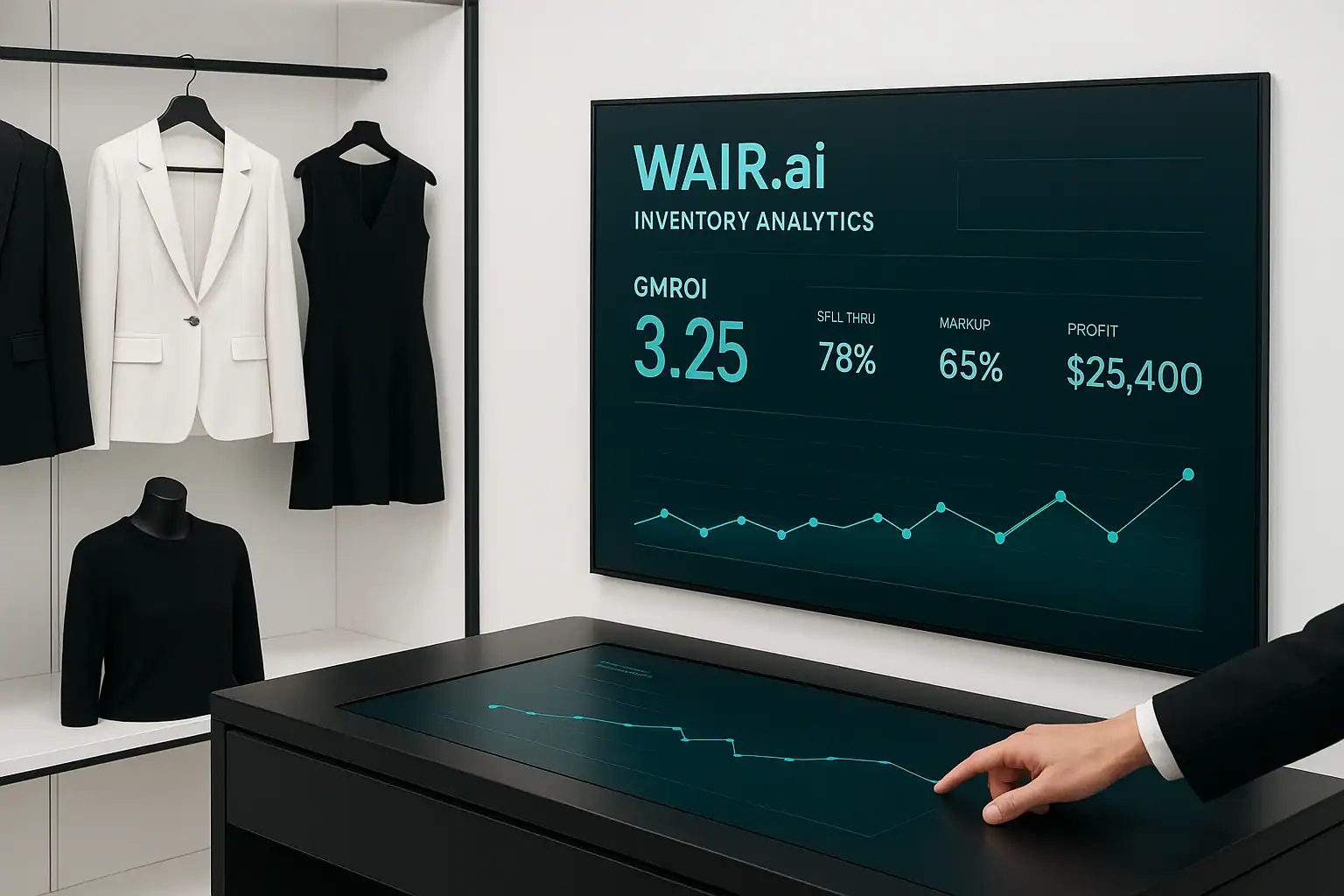
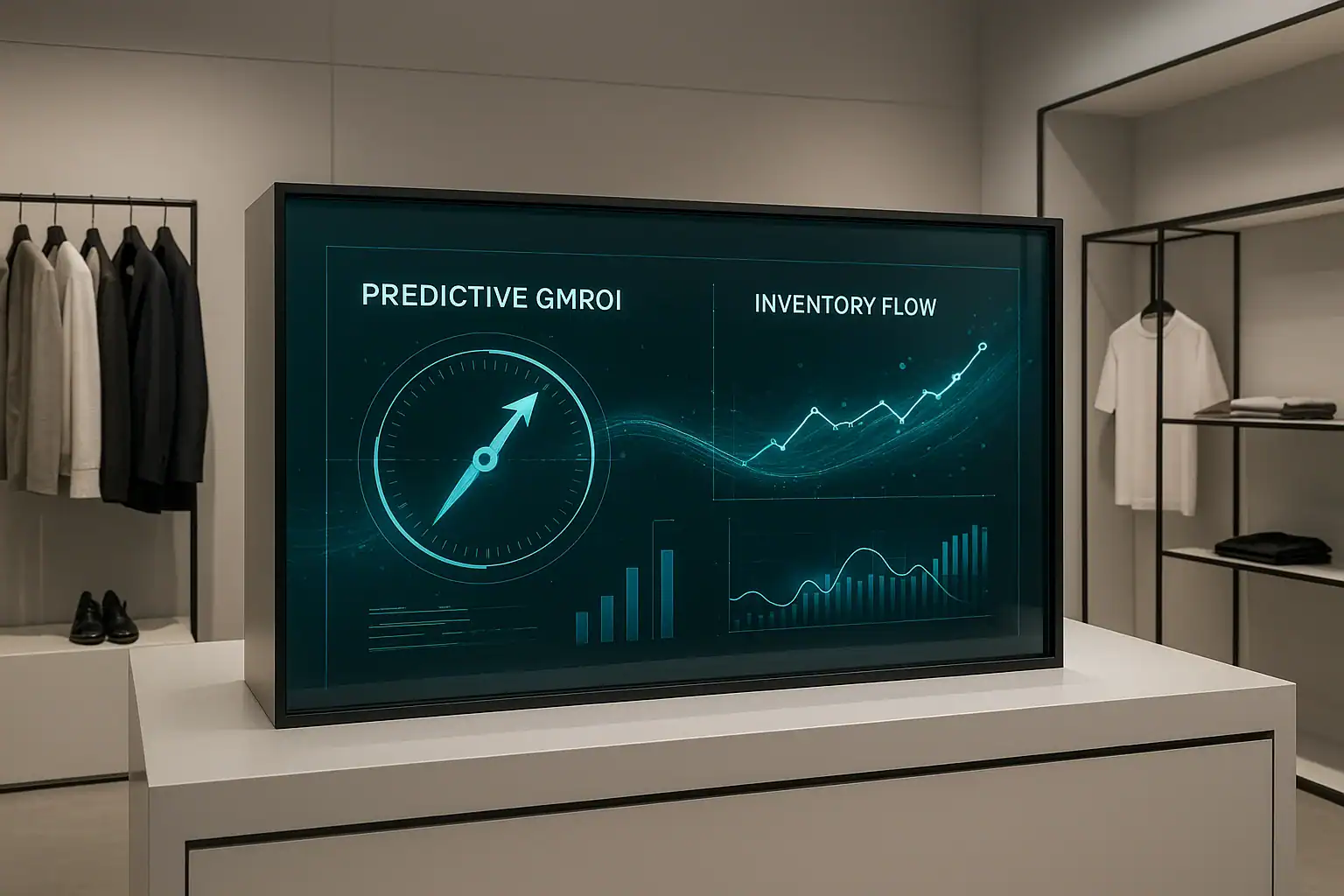
For retail leaders, inefficient inventory is a constant drain on profitability. The capital tied up in overstocked items and the revenue lost to stockouts represent two sides of the same coin, both leading to margin erosion and a weaker bottom line. While many metrics track performance, Gross Margin Return on Investment (GMROI) stands out as the ultimate measure of how effectively each dollar invested in inventory generates profit. The challenge isn’t just tracking GMROI, it’s actively and systematically improving it. This is where retailers often hit a wall, relying on historical data and manual adjustments that can’t keep pace with modern market dynamics.
The solution lies in shifting from reactive adjustments to proactive, predictive strategies. Advanced AI offers a direct path to elevating GMROI by transforming how inventory is forecasted, allocated, and managed. By moving beyond simple automation, an agentic AI company like WAIR.ai provides the tools to not only see the future of demand with greater clarity but to act on it autonomously, ensuring every inventory decision is optimized for maximum profitability. Understanding the ROI of AI in retail demand forecasting is the first step toward unlocking this potential.
Understanding GMROI the core metric of inventory performance
At its core, GMROI answers a simple but critical question: For every dollar you spend on inventory, how many dollars in gross margin are you getting back?
The formula itself is straightforward:
GMROI = gross margin / average inventory cost
A GMROI greater than one means you’re making money, a figure below one indicates you’re losing money on your inventory investment.
But its simplicity is deceptive. Optimizing GMROI for retail has traditionally been a complex balancing act plagued by siloed data, inaccurate manual forecasting, and an inability to respond quickly to market shifts. Retailers often find themselves caught in a cycle of overcorrecting, leading to excess stock in one season and missed sales in the next. To truly move the needle, you need to simultaneously increase gross margin while reducing the average cost of inventory on hand. This is precisely where AI provides a decisive advantage.
The AI advantage how it transforms each GMROI component
AI elevates GMROI not by focusing on one variable but by creating a synergistic effect across the entire inventory lifecycle. It improves the accuracy of demand forecasts, optimizes the placement of every unit, and ensures the entire system adapts in real time. This integrated approach directly impacts both the numerator (gross margin) and the denominator (average inventory cost) of the GMROI equation.
Accurate demand forecasting for a GMROI lift
The foundation of strong inventory performance is knowing what your customers will want to buy. AI-driven demand forecasting achieves this with unprecedented accuracy by analyzing hundreds of variables simultaneously, from historical sales and seasonality to upcoming promotions and external factors like weather patterns. This multidimensional analysis results in a 30-50% reduction in forecasting errors compared to traditional methods.
This leap in accuracy has a direct and measurable impact on profitability. By aligning inventory purchases with true demand, AI-enabled systems can cut inventory holding costs by 15-25%. At the same time, they drastically reduce the risk of lost sales, with some retailers seeing stockout reductions between 40-60%. This dual benefit, less capital tied up in unproductive stock and more sales captured at full price, is a powerful driver for AI driven inventory optimization.
Optimized inventory allocation and replenishment for superior turns
Accurate forecasting is only half the battle. The other half is ensuring the right product is in the right place at the right time to maximize sales velocity. AI excels at dynamic inventory allocation, distributing stock across stores and channels based on hyper local demand signals and real time inventory levels. This eliminates the guesswork that leads to regional stock imbalances.
This intelligent placement directly improves inventory turns, a key factor in reducing average inventory cost. Faster turns mean capital is freed up more quickly and the risk of products becoming obsolete or requiring markdowns is minimized. Through automated and optimized replenishment, AI ensures that popular items are always in stock without creating excess, thereby maintaining a lean and productive inventory that consistently contributes to a higher GMROI.
Agentic AI for autonomous inventory balance
The next frontier in inventory management goes beyond predictive analytics to autonomous action. Agentic AI represents a significant evolution from traditional systems, acting as an autonomous agent that not only identifies potential issues but also executes solutions. It can autonomously trigger stock redistributions between stores to balance inventory, dynamically adjust safety stock levels based on real time sales velocity, and proactively solve supply chain bottlenecks before they impact sales.
This level of intelligent automation is what truly achieves optimal inventory balance. An agentic AI system works tirelessly to prevent both overstocks and stockouts with minimal human intervention, ensuring your inventory is always working at peak efficiency. This autonomous management is the key to unlocking the highest possible GMROI.
Measuring the ROI of AI on your bottom line
How do these operational improvements translate into financial results? The impact is clear and quantifiable. Companies using advanced machine learning for inventory management report revenue increases of 10-15% and cost reductions of 5-10%. By minimizing markdowns on unsold goods and reducing carrying costs, AI directly protects and enhances your gross margin.
Furthermore, with over half of retail companies now actively measuring AI ROI, the business case is stronger than ever. The ability to track improvements in sell through rates, inventory turns, and reduced markdowns provides a clear framework for justifying the investment. These metrics allow you to directly connect the technology to financial outcomes, measuring the business impact of every automated decision.
Integrating AI for seamless GMROI optimization
Adopting AI doesn’t have to be a disruptive overhaul. A successful strategy involves a phased approach that builds momentum and demonstrates value at each step. It begins with a comprehensive data audit to ensure you have a clean foundation, followed by targeted pilot projects to prove the concept in a controlled environment. From there, a gradual rollout allows your organization to adapt and build confidence in the new system.
Of course, challenges like integrating with legacy systems and ensuring data quality must be addressed. A successful retail AI implementation plan requires a partner who understands these complexities and can guide your team through the change management process, ensuring the technology empowers your people rather than replaces them.
Unlock your retail’s full profit potential with AI
Ultimately, optimizing GMROI is about making your inventory work smarter, not just harder. Advanced AI provides the intelligence and automation necessary to transform your inventory from a costly liability into a high performing asset. By leveraging precise demand forecasting, optimized allocation, and the autonomous power of agentic AI, you can drive sustainable profitability and build a more resilient retail operation. WAIR.ai’s 2.5 GPT technology is designed to deliver these outcomes, providing a clear path to inventory excellence. Ready to discuss your full profit potential with AI? Schedule a meeting with our experts.
Frequently asked questions
Q: What is the main difference between AI powered and traditional inventory management?
A: Traditional inventory management relies on historical sales data and manual adjustments, making it reactive. AI powered systems are predictive, analyzing hundreds of real time variables to forecast future demand, automate replenishment, and proactively balance stock levels for optimal performance.
Q: How quickly can we expect to see an improvement in GMROI after implementing AI?
A: While results vary, many retailers begin to see measurable improvements in key metrics like forecast accuracy and stockout reduction within the first 90 days of a pilot project. Significant GMROI improvements typically become evident within six to twelve months as the system optimizes inventory across multiple seasons.
Q: What kind of data is required for an AI inventory solution to work effectively?
A: An effective AI solution requires clean, granular data, including historical sales data at the SKU and store level, current inventory levels, product attributes, and promotional calendars. Integrating external data sources like weather forecasts and local events can further enhance the accuracy of predictions.