For fashion and lifestyle retailers navigating today’s dynamic market, optimizing inventory turnover isn’t just about moving products faster, it’s about unlocking trapped capital, boosting cash flow, and enhancing overall profitability. Many retailers grapple with the complexities of balancing stock levels, fearing both the lost sales from understocking and the margin erosion from overstocking. The key lies in strategic, data-driven levers that transform inventory from a liability into a liquid asset. This is where advanced solutions, leveraging agentic AI, offer a definitive advantage by providing the precision needed to accelerate your turn rate effectively.
Understanding the critical role of inventory turnover
Inventory turnover is a crucial metric, representing how many times a company has sold and replaced inventory during a specific period. It is calculated by dividing the Cost of Goods Sold by the Average Inventory. A healthy turnover rate signifies efficient inventory management, strong sales, and minimal holding costs.
Retailers constantly strive for an optimal turnover. While general retail often aims for 2 to 4.5 turns annually, this figure varies significantly by industry. For instance, supermarkets and pharmacies typically see much higher rates, around 14.5 and 14.2 turns, respectively, due to perishable goods, whereas furniture retailers might aim for around 3.4 turns. Interpreting your turnover in the context of your specific retail sector is vital for accurate performance assessment.
A higher, healthier turnover rate offers several core benefits:
Faster selling stock means cash isn’t tied up in inventory, freeing it for other investments or operations.
Less time in storage translates to lower expenses for warehousing, insurance, and potential obsolescence.
A lean inventory allows you to respond quicker to changing market trends and customer demands.
Fewer markdowns are needed to clear old stock, protecting your margins.
- Higher customer satisfaction:
Optimized inventory helps ensure products are in stock when customers want them, improving their experience.
Conversely, a low turnover rate often signals issues such as overstocking, poor sales forecasting, or ineffective marketing strategies, leading to significant financial burden.
Strategic levers for accelerating your turn rate with WAIR.ai
Traditional inventory management methods, often relying on historical data and manual adjustments, frequently fall short in today’s fast paced retail environment. These methods can lead to the widespread problem of inaccurate inventory, with 58% of retail brands and direct to consumer manufacturers having less than 80% inventory accuracy. This forms a critical underlying problem that significantly impacts turnover. WAIR.ai, as an agentic AI company, offers a suite of integrated solutions designed to overcome these challenges by providing granular, predictive insights.
AI powered demand forecasting for unparalleled accuracy
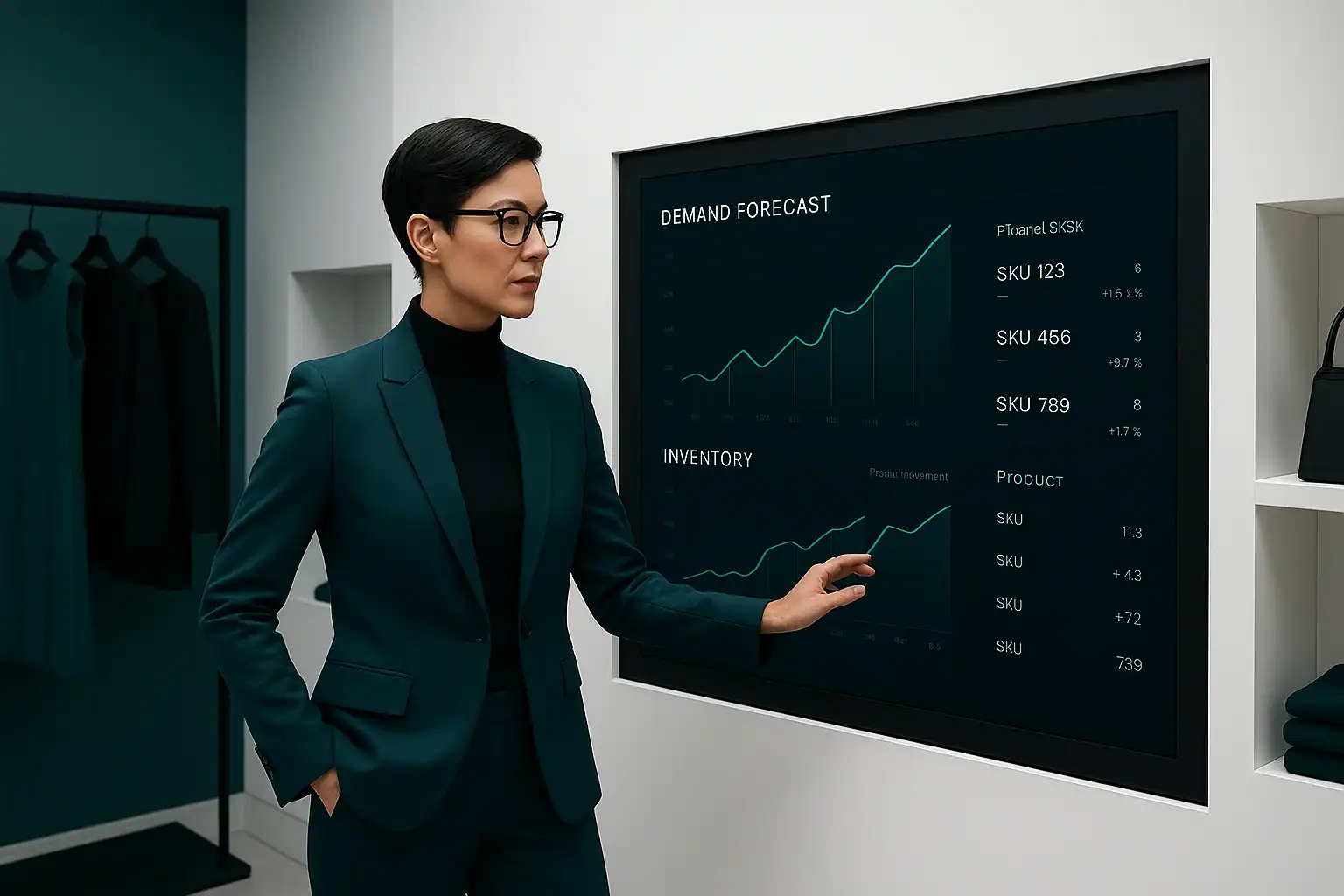
One of the most powerful levers for accelerating inventory turnover is precise demand forecasting. Traditional forecasting often struggles with volatility, seasonality, and the sheer volume of variables in retail. This is where agentic AI shines, transforming demand forecasting from a retrospective exercise into a proactive, forward looking strategy.
How does agentic AI elevate demand forecasting?
WAIR.ai’s solutions, such as Wallie, move beyond broad categories to predict demand at the SKU, size, color, and location level. This hyper granular accuracy is crucial for fashion retailers.
- External data integration:
Our proprietary ForecastGPT 2.5 model goes beyond internal sales data. It integrates external factors like demographics, weather patterns, local events, and even competitor activities to generate more robust predictions.
- Machine learning and predictive analytics:
Leveraging deep learning models, WAIR.ai constantly refines its forecasts, learning from new sales data and market shifts in real time. This adaptive capability ensures that predictions remain accurate even in unpredictable markets.
By harnessing agentic AI for real time AI demand forecasting, retailers can achieve a significant reduction in excess inventory, ensuring products are available where and when they are needed most. This precision minimizes both overstock and understock situations, directly leading to a healthier inventory turnover.
Intelligent assortment planning and SKU rationalization
The complexity of modern retail assortments, particularly in fashion, can significantly impede inventory turnover. Slow moving SKUs tie up capital and warehouse space, leading to costly markdowns. Agentic AI provides the intelligence needed to optimize your product mix proactively.
How does agentic AI enhance assortment planning?
- Performance based insights:
AI analyzes sales performance, customer preferences, and profitability for each SKU, identifying underperformers that should be phased out or reduced.
- Optimal product mix recommendations:
Beyond simply cutting poor performers, AI helps recommend the ideal product mix for different store clusters or online segments, maximizing their sales potential.
For apparel retailers, getting the size curve right is paramount. WAIR.ai helps optimize size curve planning to maximize sell through by predicting demand for specific sizes and colors within each style, preventing overstocking of less popular sizes.
By implementing AI strategic retail assortment planning, retailers can ensure their shelves are stocked with items that resonate with local demand, thereby accelerating sales and improving turnover.
Dynamic promotional strategies and markdown optimization
Promotions and markdowns are often used as reactive measures to clear excess stock, sometimes at the cost of significant margin erosion. Agentic AI transforms these into proactive, strategic levers that accelerate turnover while protecting profitability.
How does agentic AI optimize promotions and markdowns?
- Predictive promotional lift modeling:
WAIR.ai’s solutions analyze historical promotional data, price elasticity, and current inventory levels to predict the optimal discount level, timing, and product combinations that will maximize sell through and revenue.
Instead of blanket discounts, AI recommends targeted markdown strategies to clear specific excess inventory, ensuring the minimum necessary reduction to move stock while preserving as much margin as possible. The fashion industry alone had excess stock worth $170 billion in 2023, highlighting the immense opportunity for optimized markdown strategies.
By constantly monitoring competitor pricing and real time demand signals, AI can suggest dynamic pricing adjustments to accelerate sales without unnecessary margin sacrifice.
With AI driven markdown promotional inventory optimization and AI strategic promotion planning execution, retailers can strategically accelerate the movement of goods, reduce the impact of excess inventory, and ultimately improve their inventory turnover ratio.
WAIR.ai as your partner for sustainable growth
The retail landscape is constantly evolving, making efficient inventory management more crucial than ever. Retailers using AI powered loss prevention report a 25-40% reduction in shrinkage rates, underscoring the broad impact of AI. WAIR.ai, as an agentic AI company, is designed to be your strategic advisor, guiding you through these complexities with cutting edge technology. Our solutions, including Wallie and Suzie, are built to directly connect technology to measurable business outcomes such as overstock reduction, sell through improvement, and margin protection. We translate advanced AI into practical, actionable solutions that fashion retailers can adopt without needing deep technical expertise.
The biggest untapped opportunity for many mid-sized fashion brands is realizing how agentic AI can drastically cut overstock, lift margins, and make international expansion less risky by ensuring product content is consistent and localized with tools like Suzie. By focusing on innovation, efficiency, and global reach, WAIR.ai empowers you to not only accelerate inventory turnover but also to grow more sustainably and profitably. Schedule a meeting with our experts to discuss your specific needs.
Frequently asked questions
Q: What is a good inventory turnover ratio for a fashion retailer?
A: A good inventory turnover ratio for fashion retail typically falls between 4 and 6 turns annually. However, this can vary based on factors like product type (fast fashion vs. luxury), business model, and seasonality. It is important to benchmark against industry averages specific to your niche.
Q: How does agentic AI predict demand without historical data for new products?
A: Agentic AI models, like WAIR.ai’s ForecastGPT 2.5, can use various data points to predict demand for new products, even without direct historical sales. This includes leveraging data from similar products, market trends, external factors (e.g., social media buzz, influencer campaigns), demographic data, and competitor analysis. Advanced machine learning algorithms identify patterns from these diverse sources to generate initial forecasts and then rapidly learn from early sales data.
Q: What are the integration requirements for AI inventory software like WAIR.ai?
A: WAIR.ai solutions are designed for seamless integration with existing retail systems, including ERP, POS, and e-commerce platforms. Key requirements typically involve establishing secure data feeds for sales, inventory, and product information. Our team works closely with retailers to ensure a smooth implementation process, often leveraging APIs for efficient data exchange to integrate AI into your retail tech stack.
Q: Can agentic AI help with reducing excess inventory in multiple store locations?
A: Absolutely. WAIR.ai’s Wallie solution specializes in optimizing inventory across multiple store locations through features like initial distribution, replenishment, and intelligent redistribution. By accurately forecasting local demand and analyzing stock levels in real time, Wallie ensures that inventory is balanced across your entire retail footprint, significantly reducing the occurrence of overstock and understock at individual stores.