Every retail leader knows the constant tension between having enough stock to meet demand and the risk of being left with too much. You track Gross Margin Return on Investment (GMROI) to measure profitability, while simultaneously managing inventory risk to prevent losses. But what if these weren’t separate battles? The most successful retailers understand that improving GMROI and reducing inventory risk are two sides of the same coin.
Viewing them as a single, integrated challenge unlocks a more powerful approach to profitability. Every dollar tied up in dead stock or lost to markdowns is a direct hit to your GMROI. By adopting tactical strategies that proactively mitigate risk, you aren’t just protecting your business from losses, you are actively building a more efficient and profitable inventory engine. Our guide moves beyond the basics to provide actionable strategies that link risk management directly to financial returns.
Deconstructing the link between inventory risk and GMROI
Before diving into tactics, it’s crucial to understand why this connection is so vital. Inventory risk isn’t an abstract concept, it has immediate and quantifiable financial consequences that directly suppress your GMROI. A healthy GMROI, often benchmarked around 2.5 for apparel, signals that you’re earning $2.50 for every dollar invested in inventory. When risk is high, that return plummets.
The primary culprits are clear. Dead stock ties up capital that could be invested elsewhere. Unplanned markdowns erode gross margin. And inaccurate forecasting leads to a cycle of both overstock and stockouts, creating inefficiency across your entire operation. The key is to shift from a reactive stance, where you deal with these problems as they arise, to a proactive one where your strategy is designed to prevent them.
Strategic levers for boosting GMROI and cutting risk
Improving your financial outcomes requires a multi-faceted approach that integrates smarter forecasting, pricing, and supply chain management. By focusing on these three core areas, you can create a resilient system that not only minimizes downside risk but also maximizes your inventory’s profit potential. These strategies work together to ensure you have the right product in the right place at the right time and at the right price.
Master your demand forecasting with advanced AI
Accurate demand forecasting is your first and best defense against inventory risk. Traditional methods often fall short because they can’t process the complex variables that influence modern retail. This is where advanced AI provides a decisive advantage. AI-driven forecasting can improve accuracy by 20-50% by analyzing multi-dimensional data sets that legacy systems can’t handle, such as weather patterns, local events, and consumer sentiment signals.
So, what’s the ROI of switching to AI based demand planning? It’s found in the direct reduction of both overstocks and stockouts, which in turn boosts sales and protects margins. Agentic AI goes a step further by not just predicting demand but also recommending specific actions to optimize inventory levels across your network, turning complex data into clear, profitable decisions.
Implement precision pricing and markdown strategies
Markdowns are an unavoidable part of retail, but they don’t have to decimate your margins. A strategic approach to pricing and promotions can help you recover value from slow moving stock while protecting your overall GMROI. The goal is to move beyond reactive, store wide clearance events and toward targeted, data driven price adjustments.
This is where AI markdown optimisation becomes essential. An intelligent system can identify which items are at risk of becoming dead stock and recommend the optimal discount to spur sales without giving away unnecessary margin. This allows you to act early and precisely, maximizing sell through while preserving profitability on a per item basis.
Strengthen your supply chain and supplier relationships
Your inventory strategy is only as strong as your supply chain. In an era where disruptions are common, building resilience is non-negotiable. According to recent studies, 93% of supply chain executives are planning to increase resilience through technology investments, with a focus on real time visibility and predictive analytics.
To translate this into better GMROI, consider the following tactical approaches that a select group of vendors specializing in AI inventory management for high granularity supply chains can facilitate.
A few key tactics can make a significant difference in how your supply chain impacts your bottom line. These actions create a more agile and cost effective inventory flow.
- Collaborative forecasting:
Share data with key suppliers to align production schedules with your demand forecasts, reducing lead time variability and the need for excess safety stock.
Negotiate terms like flexible order minimums or consignment agreements for certain products to reduce your upfront inventory investment and risk.
Avoid over reliance on a single supplier or region to mitigate the impact of localized disruptions on your inventory availability.
Continuously measure to manage effectively
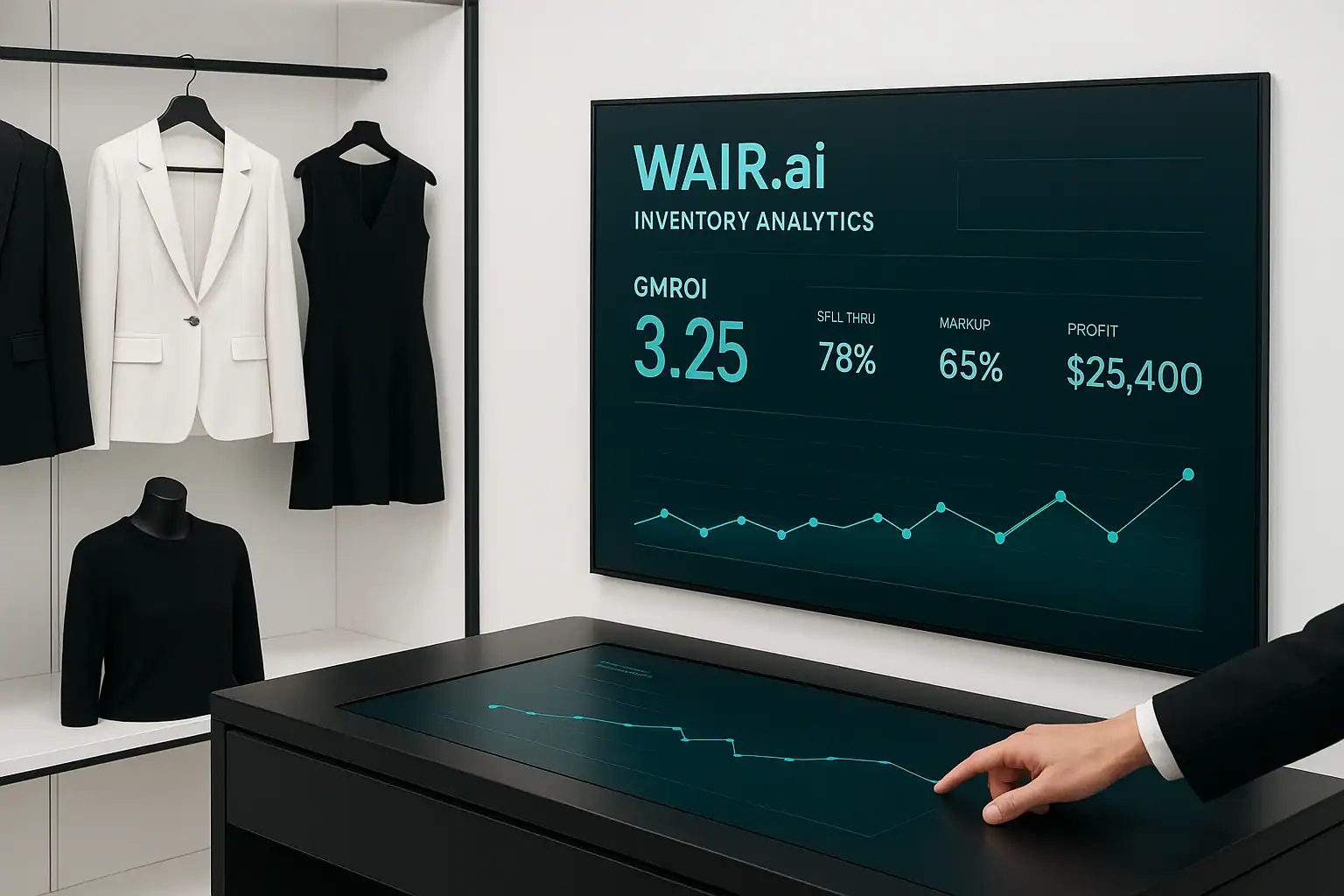
You can’t improve what you don’t measure. A culture of data-driven decision-making is essential for connecting your inventory strategies to financial results. By tracking the right metrics, you can get a clear picture of your operational health and identify opportunities for improvement. Robust retail inventory analytics provide the visibility needed to assess your overall inventory performance and ensure your tactics are delivering the intended financial returns.
Turn your inventory from a liability into your greatest asset
Shifting your mindset from managing two separate goals, GMROI and inventory risk, to a single, unified strategy is the first step toward building a more resilient and profitable retail operation. It’s about making smarter, data driven decisions at every point in the inventory lifecycle, from initial buy to final sale.
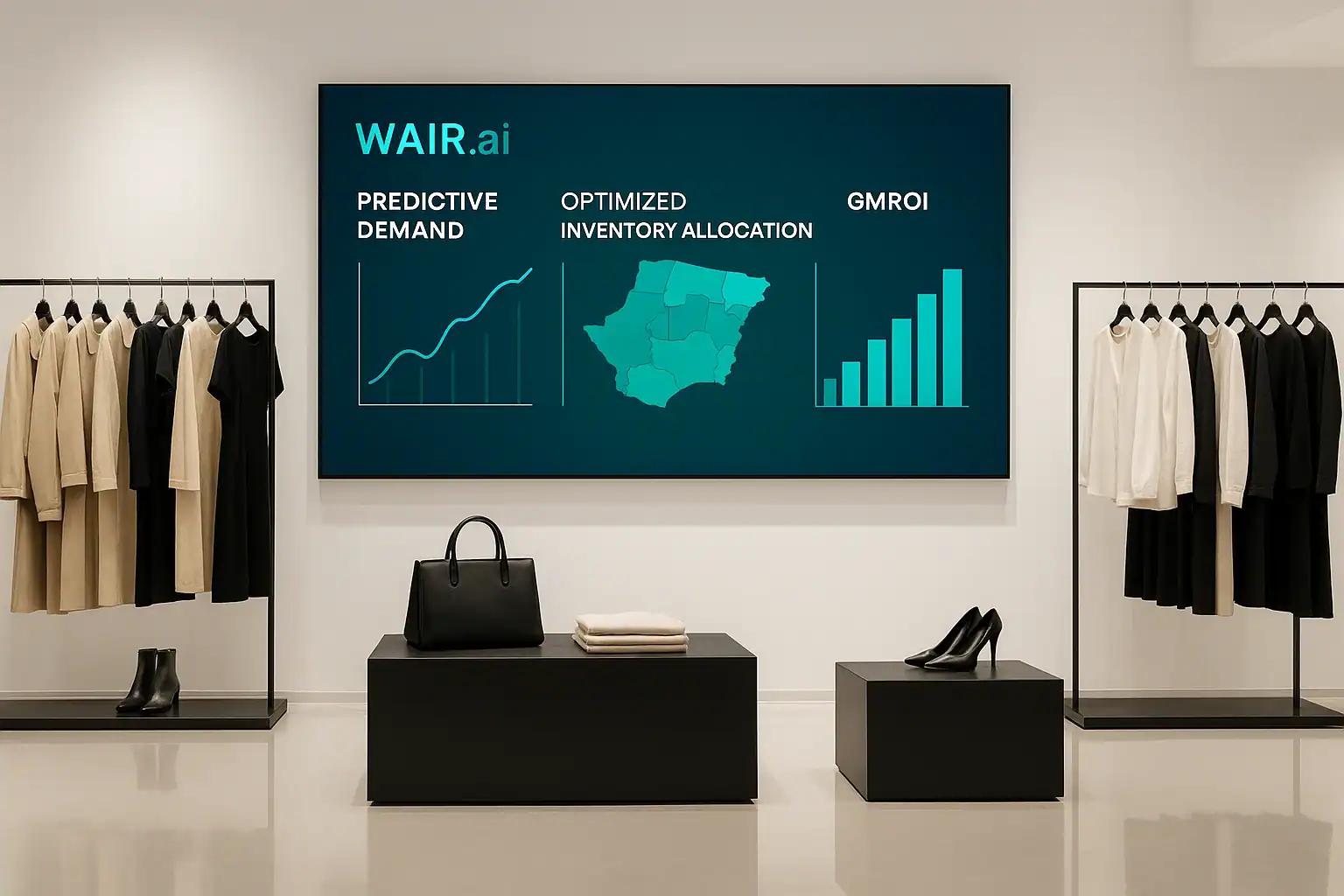
As an agentic AI company, WAIR.ai provides the tools to automate these complex decisions. Our solutions for demand forecasting, inventory allocation, and content creation are designed to work together, helping you increase sell through, protect margins, and turn your inventory faster. By embedding intelligence into your core operations, you can transform inventory from a potential liability into your most powerful driver of growth. Ready to discuss your full profit potential with AI? Schedule a meeting with our experts.
Frequently asked questions
Q: What is a good GMROI for a fashion retailer?
A: While it varies, a common benchmark for apparel and fashion retailers is a GMROI of 2.5 or higher. This indicates that for every dollar invested in inventory, the company generates $2.50 in gross margin. Top performers can achieve a GMROI of 3.0 or more through highly efficient inventory management.
Q: How does reducing dead stock directly improve GMROI?
A: Dead stock represents capital that is not generating returns. By reducing it through strategic markdowns, redistribution, or better initial forecasting, you lower your average inventory cost. Since GMROI is calculated as Gross Margin / Average Inventory Cost, a lower denominator directly increases your GMROI.
Q: Can I improve GMROI without taking on more risk?
A: Yes, absolutely. The strategies outlined here are designed to do just that. By using AI to forecast demand more accurately, you reduce the risk of both overstocking and understocking. This allows you to optimize your inventory investment, increase sales from available stock, and protect margins, all of which contribute to a higher GMROI with less financial exposure.
Q: What is the first step I should take to implement these strategies?
A: The most impactful first step is to gain a deep, accurate understanding of your demand patterns. Implementing an advanced demand forecasting solution gives you the foundational insight needed to optimize everything else, from inventory buys and allocation to pricing and markdown decisions.