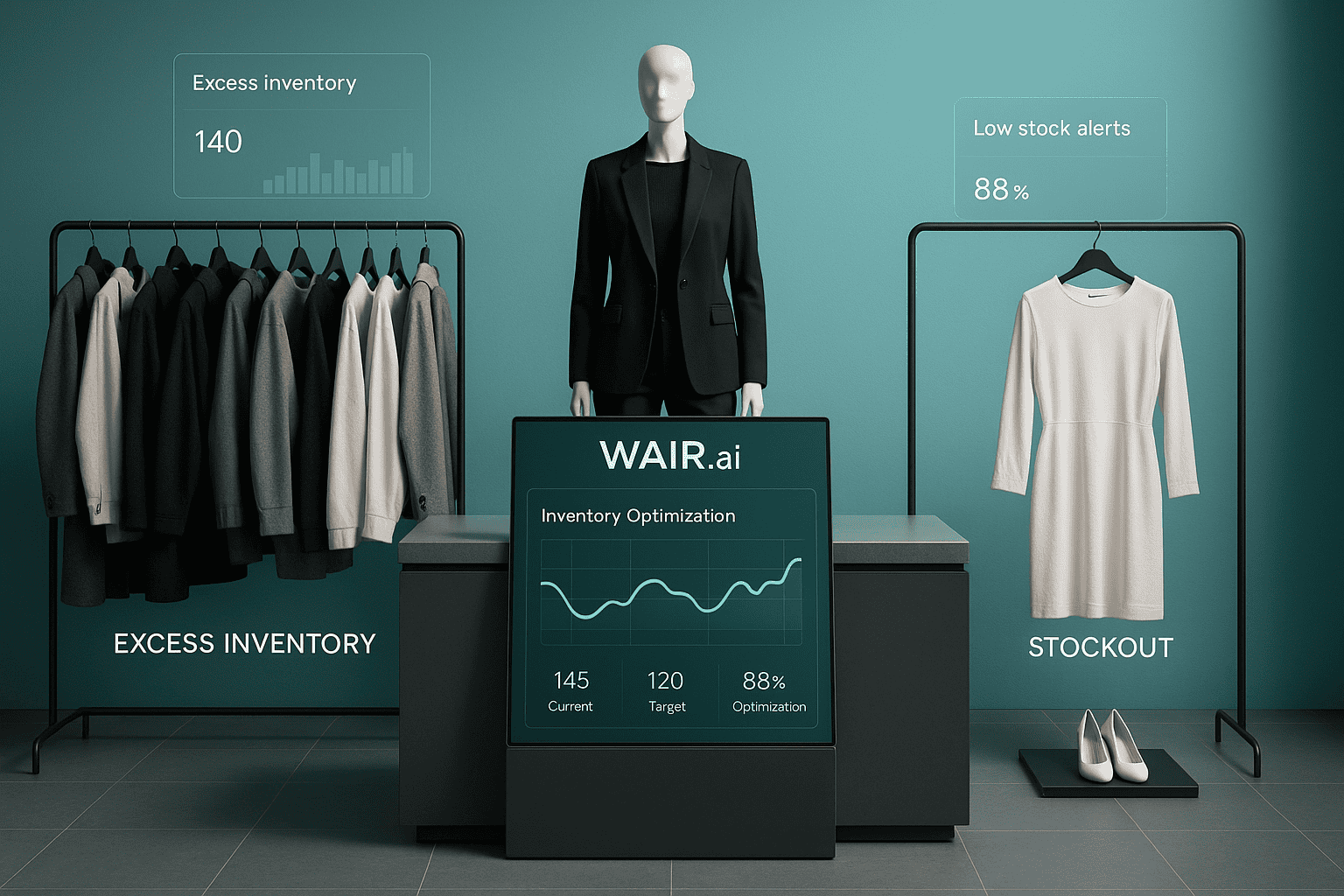
GMROI retail optimization is essential for fashion and lifestyle executives who want to unlock higher profitability from every inventory investment. In a competitive landscape where capital efficiency dictates survival, knowing how effectively your inventory converts into profit becomes the cornerstone of sustainable growth. This guide moves beyond basic definitions, offering a practical framework for how decision-makers can leverage advanced strategies and agentic AI to significantly enhance this crucial metric.
Decoding GMROI its definition formula and core principles
At its heart, GMROI measures a firm’s ability to turn inventory into cash above its cost, effectively showcasing how much gross profit you generate for every dollar invested in inventory. This metric is a powerful lens through which to evaluate inventory profitability, moving beyond simple sales volume to reveal true financial efficiency (Investopedia).
To calculate GMROI, you essentially compare your gross margin to your average inventory cost. This gives you a clear picture of how well your inventory is performing.
Here is the fundamental formula for GMROI:
- GMROI formula
Gross Margin / Average Inventory Cost
Let’s break down the components of this formula:
- Gross margin: (Net Sales – Cost of Goods Sold (COGS))
This represents the profit a company makes after deducting the costs associated with producing or selling its products. Efficient inventory management directly impacts COGS, thus influencing your gross margin (Breaking Into Wall Street).
- Average inventory cost: (Beginning Inventory Cost + Ending Inventory Cost) / 2
This figure represents the average value of inventory held over a specific period, typically a year or a quarter. Minimizing this cost while meeting demand is a core aspect of inventory optimization.
For example, if a retailer has a gross margin of $500,000 and an average inventory cost of $200,000, their GMROI would be $2.50. This means for every dollar invested in inventory, they are generating $2.50 in gross profit (FathomHQ).
The gross profit method for inventory estimation
While calculating GMROI, situations may arise where a physical inventory count isn’t feasible, such as for interim financial statements or after an unforeseen event like a disaster (AccountingCoach). In these cases, the gross profit method provides a reliable way to estimate ending inventory.
The gross profit method relies on a known historical gross profit percentage to estimate the cost of goods sold. The process involves a few key steps:
- Estimate cost of goods sold
Multiply total sales by (1 – gross profit percentage).
- Calculate estimated cost of goods available for sale
Add beginning inventory to purchases.
- Determine estimated ending inventory
Subtract the estimated cost of goods sold from the estimated cost of goods available for sale.
This method, though an estimation, is a valuable tool for maintaining financial oversight even when direct inventory figures are unavailable (GoCardless, PrinciplesofAccounting).
The landscape of performance GMROI and inventory turnover benchmarks in retail
Understanding your GMROI is essential, but its true power emerges when compared against industry benchmarks. These comparisons help you assess your performance relative to peers and identify areas for strategic improvement (Retalon, Netstock). It’s crucial to remember that what constitutes a “good” GMROI or inventory turnover ratio varies significantly by industry due to different product lifecycles, margins, and sales volumes.
For most general retailers, a GMROI above $1.0 indicates profitability, while many strive for $2.0, and high-performing businesses can achieve $3.0 or higher (Toolio, Fathom). Similarly, a healthy inventory turnover ratio for general retail typically falls between 4 and 10, though industries with perishable or high-volume goods often see much higher rates (Lightspeed, Magestore).
Let’s look at some typical ranges for GMROI and inventory turnover across different retail verticals:
- Apparel retailers
Often aim for a GMROI between $1.50 and $3.00, reflecting seasonal demand and fashion cycles. Inventory turnover for apparel typically ranges from 4 to 6 times per year (Retalon, Retail Dogma).
- Electronics retailers
Can see higher GMROI figures, sometimes between $4.00 and $6.00, driven by higher-priced items and consistent demand for new technology. Inventory turnover might be lower due to unit cost, perhaps 3 to 5 times (Retalon, Toolio).
- Home goods and furniture
Typically have a GMROI around $2.00 to $2.50. Given the larger size and slower sales cycles, inventory turnover tends to be lower, often 2 to 4 times annually (Retalon, Toolio).
- Convenience stores
While individual item margins might be lower, high sales volume and rapid stock movement lead to a healthy GMROI, potentially around $6.69 (Shopify). Their inventory turnover ratios can be significantly higher, easily exceeding 10 times a year.
- Specialty retailers
These businesses vary widely. For instance, florists might have a GMROI as high as $15 due to high markup and perishable goods, requiring extremely high inventory turnover (Retalon).
- Cosmetics and beauty supply
Often achieve a GMROI around $2.68 to $2.85, with inventory turnover varying based on product popularity and new launches (Toolio, Shopify).
These benchmarks provide valuable context, but your internal data and strategic goals should always guide your specific targets. Regularly tracking these key inventory performance indicators is critical for informed decision-making.
Beyond basics strategic inventory turnover for optimized GMROI
Optimizing GMROI isn’t just about managing inventory costs; it’s about strategically maximizing the speed and efficiency with which that inventory converts into gross profit. This means focusing intensely on your inventory turnover ratio and implementing advanced strategies. For many retailers, 70% to 80% of assets are tied up in inventory, making efficient movement paramount (Shopify).
Consider these advanced approaches to supercharge your inventory turnover:
- Demand driven replenishment
Moving beyond fixed reorder points, this strategy uses real-time sales data and predictive analytics to automatically trigger replenishment orders precisely when needed, ensuring stock availability without over-ordering. This minimizes capital tied up in slow-moving items and reduces holding costs (NetSuite).
- Multi echelon inventory optimization
his approach optimizes inventory levels across the entire supply chain from central warehouses to individual stores and online fulfillment centers rather than in isolated silos. It ensures the right product is in the right place at the right time, minimizing stockouts and excess inventory across the network (ShipBob).
- ABC analysis of inventory
Categorize your inventory into A (high-value, low-volume), B (medium-value, medium-volume), and C (low-value, high-volume) items. This allows for differentiated inventory management strategies, applying rigorous control to high-value A items and more relaxed controls to C items.
- Strategic markdown and promotions
Instead of reactive, deep discounts, employ data-driven strategies for markdown and promotional optimization. This ensures you clear slow-moving inventory at the optimal time and price point, preserving margins while still encouraging sales velocity.
- Effective deadstock management
“Deadstock,” or unsellable inventory, directly drains GMROI. Strategies include strategic bundling with popular items, returning to suppliers, or donating, rather than simply writing off the loss. Proactive identification of slow-moving items is key (Shopify).
By embracing these strategies, retailers can move beyond a reactive approach to inventory management, creating a dynamic system that continuously pushes products through the sales cycle efficiently, directly boosting GMROI.
The agentic AI advantage how intelligent systems maximize retail GMROI
In today’s fast-paced retail environment, traditional inventory management methods struggle to keep up with fluctuating demand, complex supply chains, and omnichannel expectations. This is where an agentic AI company like WAIR.ai provides a critical edge, transforming how retailers maximize their GMROI. Our agentic AI solutions don’t just process data; they learn, predict, and automate decisions across the entire inventory lifecycle, ensuring every dollar invested in stock works harder.
How does agentic AI elevate your GMROI?
- Predictive analytics for unparalleled demand forecasting
WAIR.ai’s agentic AI moves beyond basic historical data, incorporating a vast array of influencing factors like weather patterns, local demographics, social media trends, competitor activities, and even macro-economic indicators (Retalon, ShipBob). Our proprietary ForecastGPT-2.5 model, for instance, delivers significantly higher accuracy in predicting demand, minimizing both costly overstock and missed sales opportunities (WAIR.ai). This precision means you buy only what you truly need. Learn more about how we use machine learning for demand forecasting.
- Dynamic pricing and promotional optimization
Pricing is a delicate balance between margin and sales velocity. WAIR.ai’s agentic AI continuously analyzes market conditions, inventory levels, and competitor pricing to recommend optimal price adjustments and promotional strategies in real-time. This includes initial pricing, seasonal promotions, and intelligent markdowns, ensuring you capture maximum gross margin while maintaining healthy inventory turnover (Toolio). Discover how AI can optimize your product lifecycle pricing.
- Automated inventory allocation and intelligent replenishment
Our solution, Wallie, acts as an intelligent allocator, ensuring the right products are in the right stores at the right time. By predicting local demand with unprecedented accuracy, Wallie automates initial distribution, replenishment, and redistribution across your network. This significantly reduces instances of localized overstock or stockouts, minimizing holding costs and maximizing sell-through, directly impacting your average inventory cost and gross margin (WAIR.ai). This focus on precise AI inventory management for apparel profitability is a game-changer.
- Uncovering hidden opportunities and mitigating risks
The sheer volume of data in retail often overwhelms human analysis. Agentic AI can sift through vast datasets to identify subtle patterns that indicate emerging trends or potential deadstock risks far earlier than manual processes. This allows for proactive adjustments, whether it’s doubling down on a trending item or initiating early, strategic actions on slow movers before they become a significant liability. This level of insight offers a distinct competitive advantage in AI inventory management for lifestyle retail.
By integrating WAIR.ai’s agentic AI solutions, retailers can move from reactive inventory management to a proactive, predictive, and profitable operation. The result is a consistently optimized GMROI that translates directly into healthier bottom lines and reduced waste.
Confidently improving your GMROI with agentic AI
For retail leaders navigating the complexities of modern commerce, maximizing Gross Margin Return on Investment is more than a financial goal it’s a testament to operational excellence and strategic foresight. The data consistently shows that while traditional methods provide a foundation, the true leap in GMROI optimization comes from embracing advanced technologies like agentic AI.
The decision to adopt new solutions hinges on understanding their tangible benefits and seamless integration. WAIR.ai’s agentic AI solutions, Wallie and Suzie, are designed to integrate effortlessly into your existing retail ecosystem, delivering measurable improvements in inventory efficiency and content creation that directly enhance your profitability. We empower retailers to overcome challenges like excess stock, inconsistent sell-through, and margin erosion, transforming them into opportunities for sustainable growth.
Ready to see how an agentic AI company can revolutionize your GMROI and drive unprecedented profitability? Learn more about our AI inventory optimization solutions and discover how to take the next step.
Frequently asked questions about GMROI and AI in retail
Q: What is a good GMROI for retail and how does it compare by industry?
A: A GMROI above $1.0 indicates profitability, while many retailers aim for $2.0 or higher. A “good” GMROI varies significantly by industry. For example, apparel retailers might target $1.50-$3.00, while electronics retailers could aim for $4.00-$6.00 due to different product values and sales cycles (Retalon, Toolio).
Q: How does inventory turnover relate to GMROI?
A: Inventory turnover measures how quickly inventory is sold and replaced. A higher inventory turnover generally means you’re moving products efficiently, which ties up less capital and reduces holding costs, thus positively impacting your GMROI (NetSuite, Lightspeed). Both metrics are crucial for assessing inventory health.
Q: Can AI really help improve GMROI, or is it just a buzzword?
A: Yes, agentic AI like WAIR.ai’s solutions demonstrably improves GMROI by enhancing demand forecasting accuracy, optimizing pricing and promotional strategies, and automating precise inventory allocation. This leads to reduced overstock, fewer markdowns, and increased sales velocity, all of which directly boost your gross margin and optimize your average inventory cost (Leafio AI, Retalon, Toolio).
Q: How long does it take to see results from implementing AI for GMROI optimization?
A: While specific timelines can vary based on the complexity of your operations, many retailers begin to see tangible improvements in key metrics like forecast accuracy, inventory levels, and sell-through rates within the first few months of implementing agentic AI solutions like WAIR.ai’s Wallie (WAIR.ai). The ongoing learning capabilities of AI ensure continuous optimization over time.